
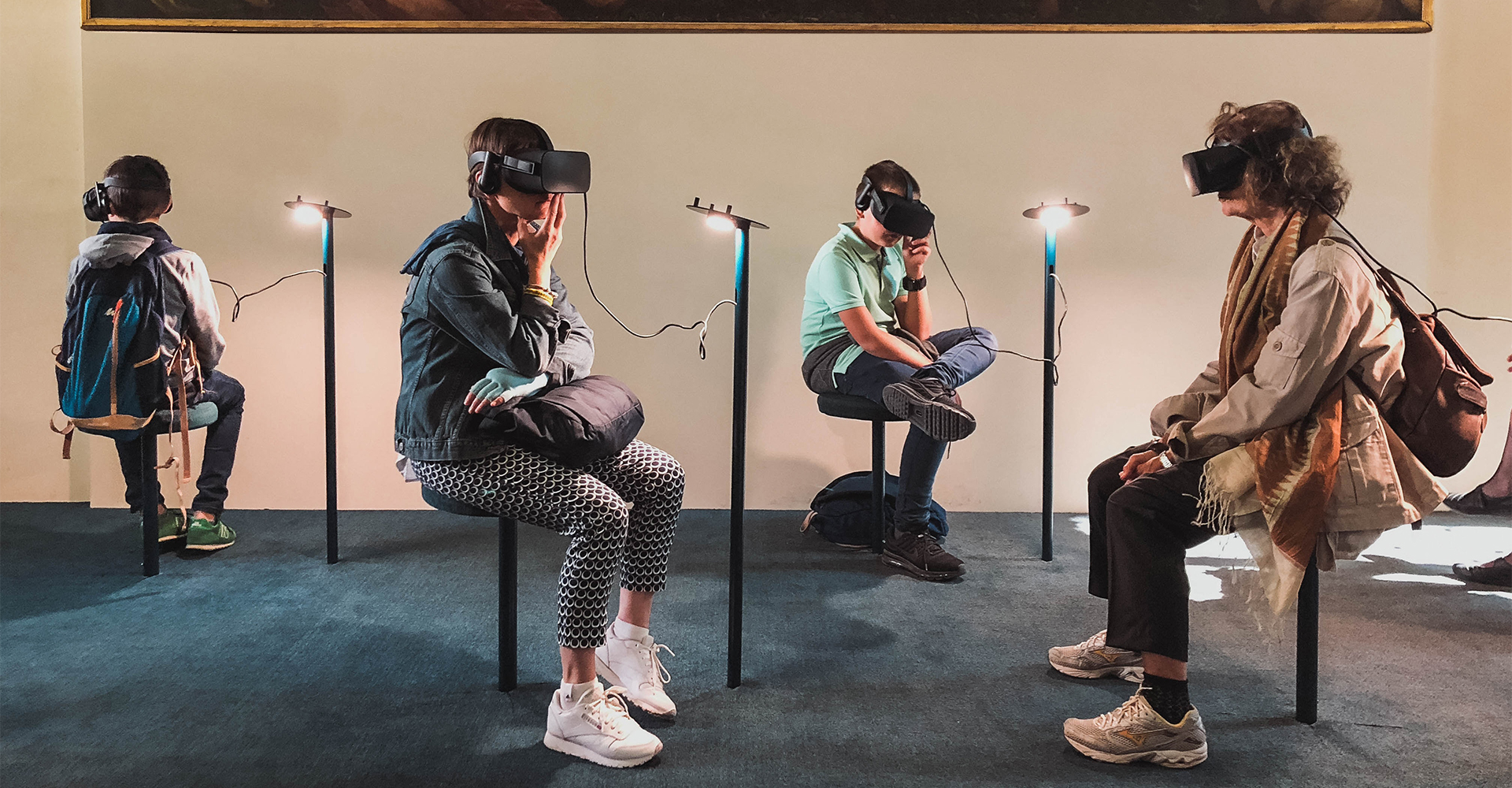
Wall generations: Our Mila Wall through the ages
Our Mila-wall has been on the market since 1991, meaning it has been around for several decades. Decades in which a lot has happened, particularly in the areas of technology and design, and during which the Mila-wall has been continuously optimised and further developed:
1991
After our unique tongue-and-groove hanging technology, which enables temporary room structures to be erected in no time at all, is patented, the first Mila-wall generation is launched on the market. Its surrounding multifunctional aluminium frame ensures the stability of the wall, and the special connection technology ensures a flawless, joint-free appearance.


1994
All threads in the wall, which had previously been cut into plastic, were replaced with injected brass sleeves. This optimised the durability of the threads and thus the quality of the Mila wall, making it more sustainable.
1997
Der umlaufende Aluminiumrahmen wird grundlegend verändert. Die Feder ist nun nicht mehr fest, sondern lösbar. Zusätzlich wird das Nut-Profil mit einer weiteren Nut versehen, um weitere Befestigungsmöglichkeiten zu schaffen. Des Weiteren wird das U-Profil zusätzlich verstärkt, was für noch mehr Stabilität sorgt.


1998
Durch einen zusätzlichen innenliegenden MDF-Holzrahmen wird die Wandkonstruktion weiter verstärkt, um die Präzision und Stabilität zusätzlich zu optimieren. Darüber hinaus wird eine Gewindebuchse im Inneren angebracht, sodass Wanderweiterungen problemlos ermöglicht werden können ohne hierfür die Wand beschädigen zu müssen. Die L-Winkel oder Vorkehrungen für Deckenhalterungen können direkt im Gewinde befestigt werden.
2001
The surrounding aluminium frame is completely anodised to prevent friction of the aluminium, thus making it even easier to assemble and dismantle the walls.


2006
The glass fibre reinforced corner block has been expanded to include two system holes, an M10 thread and an M6 thread, providing additional fastening options. Above all, however, the wall modules can now be securely connected to double-storey structures.
2013
Bonding is improved to ensure even greater stability. The Karlsruhe Institute of Technology conducts numerous stress tests, in which Mila-wall achieves excellent results. The TÜV conducts further safety tests once a year. Here, too, top results are achieved, especially in terms of bending and torsion tests, with Mila-wall withstanding approximately 1,000 kilograms.


2016
Development of Mila-wall Acoustic. The proven Mila-wall with its outstanding sound-absorbing properties was further developed. MBA was awarded the German Design Award for this achievement.
2025
We have developed a new wall series: the ‘Mila-wall Series 100 9G’. The “9G” stands for the ninth generation. In numerology, the ‘9’ also stands for transformation. And that fits quite well, because our new wall transforms the precision of the Mila-wall to a new level: the corner blocks are attached to the groove profile from behind, allowing the groove profile to run completely continuously. In addition, the groove profile has been redesigned to create more adhesive surface area for the additional surface coating and to simplify the coating process.

Think Tank:
The slightly different meeting room
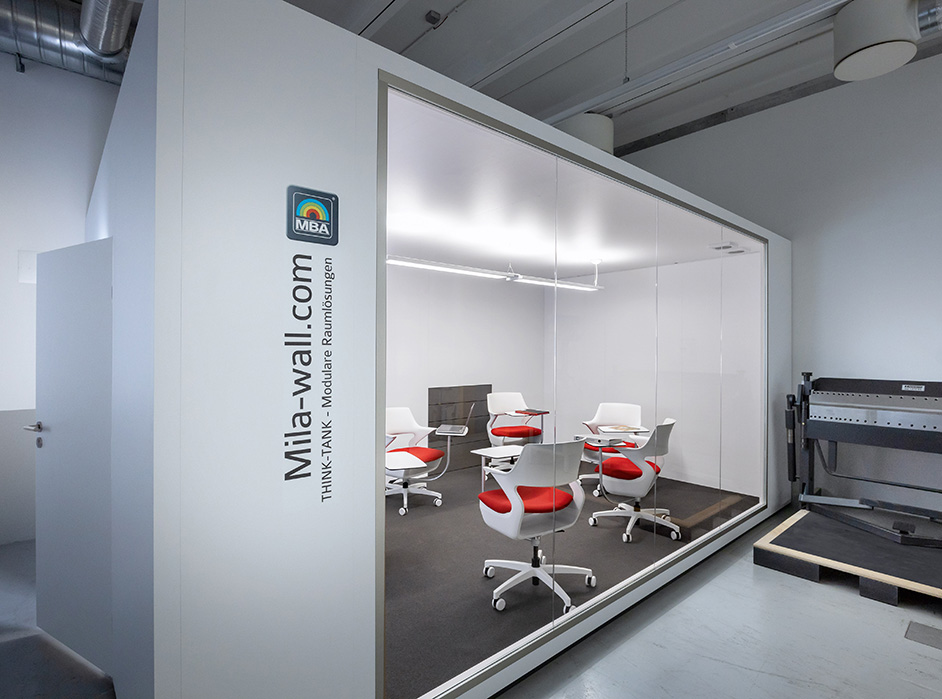
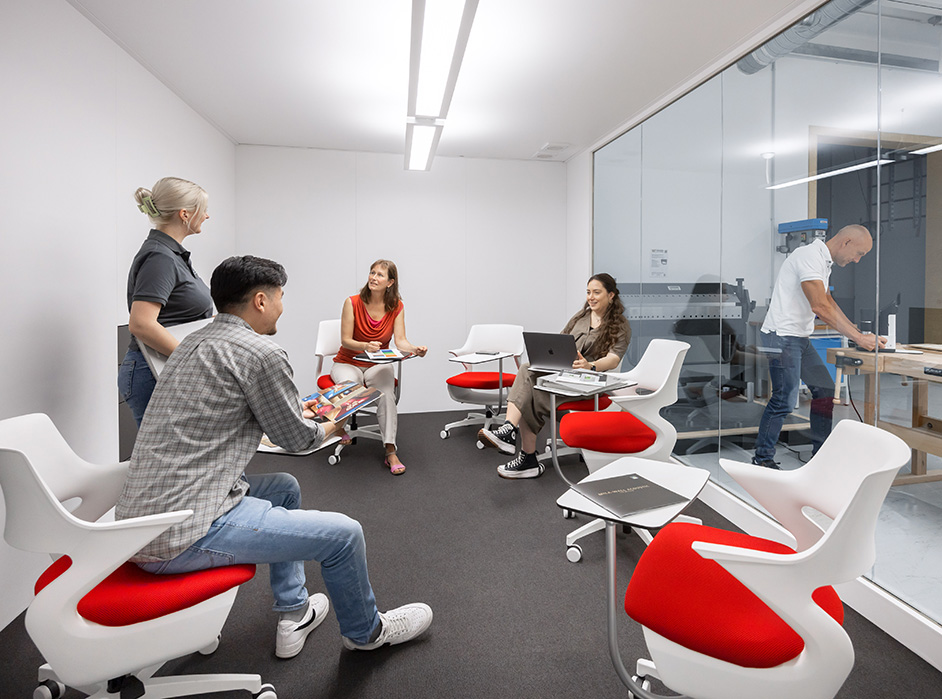
With Think Tank, we have created a spatial solution that offers a retreat for meetings and workshops, even in the hectic bustle of a trade fair day. Our ‘meeting room’ is versatile and suitable for trade fairs, events and production halls as a place for innovation, collaboration and creativity – or simply for resting.
The Mila-wall acoustic walls reduce reverberation, enabling undisturbed, productive conversations. With Mila-wall Acoustic, Think Tank is not only visually appealing, but its sound-absorbing function also significantly improves acoustics and creates a quiet and relaxed atmosphere.
Furthermore, the rooms can be dismantled at any time and set up in a new configuration. This offers a multitude of valuable possibilities and a high degree of flexibility, especially in temporary spaces, from which start-ups and other growing companies in particular can benefit.
When technology meets design
In cooperation with Simon Busse Studio and the kreon product design team, a luminaire was developed with the aim of providing the Mila Wall System with visually appealing lighting that is as minimalist as possible in terms of design, ensuring optimal illumination of the Mila Wall partitions. Extensive studies and several workshops were carried out for this purpose, ultimately resulting in the development of a luminaire that enables optimal illumination of the exhibits on display, depending on the requirements and configuration of the partition walls.
A LED engine with wallwasher reflector developed by kreon was incorporated into the luminaire designed by Simon Busse Studio. This combination enables the luminaire to be small in size and reduces the distance to the partition wall. The luminaire's built-in LED chip has a high CRI* value, which guarantees the best possible colour rendering of the exhibits. The luminaire is operated by a permanently installed Dali-2 driver and has a power output of 9.9 W at 807 Im.
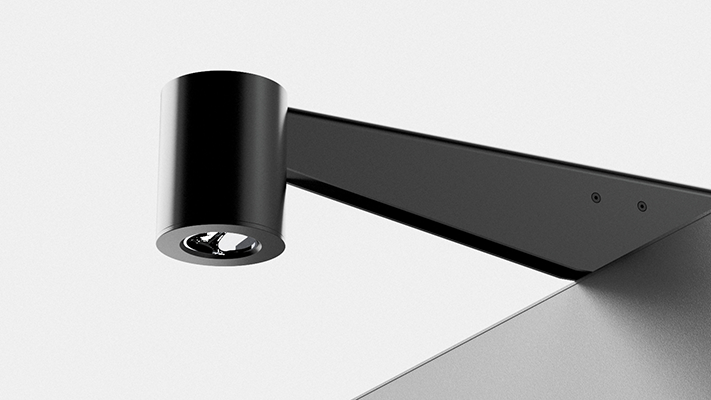
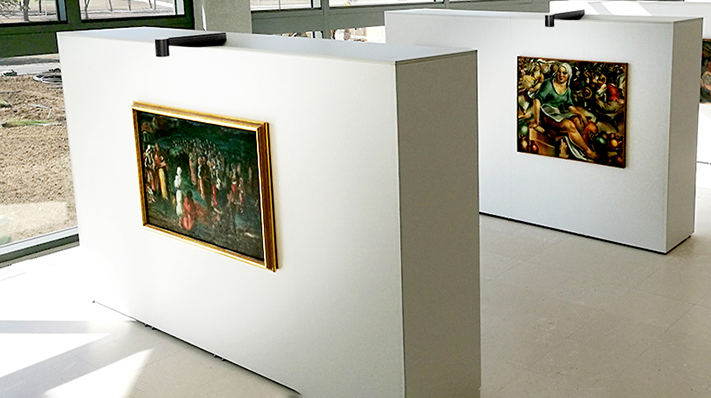
By default, the luminaire is designed to be mounted individually on the upper rail of the wall and to have an individual power supply for each luminaire. However, it is possible to supply all luminaires on a wall with power at the same time and control them together. For this purpose, a 48 V rail can be permanently integrated into the top of the partition walls, which distributes both the required power and the control signal. The rails are connected to each other with adapters. Power is supplied to the rails via an external power supply unit.
Correct lighting calculations help to ensure that the wall is illuminated in the most effective way and that the artwork is not distorted by too much or too little light. This allows the artworks to be shown to their best advantage and thus unfold their full effect. Due to the different wall constructions and materials, there are various adapters available for mounting on the different MBA wall systems.
Due to the different wall constructions and materials, there are various adapters available for mounting the Mila luminaire on the various wall systems. Different wall systems may require different types of mountings, such as dowels or clamps. The adapters help to ensure that the luminaire is firmly and securely fixed, regardless of the type of wall system.
The luminaire system is easy to adjust and maintain. The components of the system can be easily replaced, ensuring faster adaptation to new technologies. In addition, the modular systems enable more efficient use of resources, as the components can be reused for multiple projects.
Do it yourself:
DIY exhibition stands
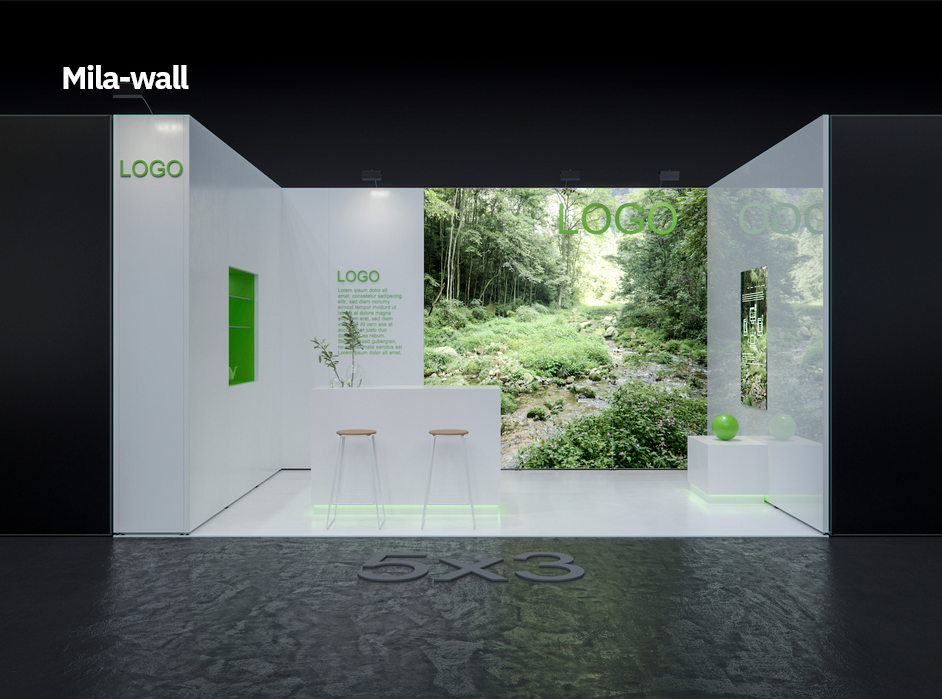
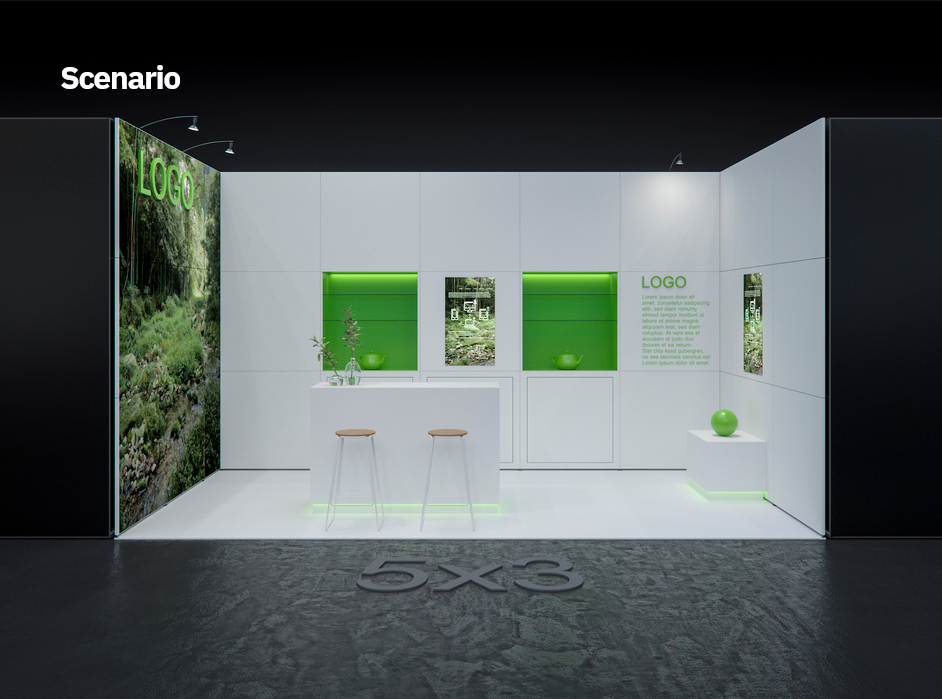
Save time and money with our modular exhibition stands. In future, you will no longer need the help of specialists and can set up your exhibition stand yourself in just a few hours. With our customised Mila-wall and SCENARIO sets, you can design your stand entirely according to your needs and expand it flexibly as required.
Mila-wall's tongue-and-groove connection technology ensures a clean and sleek look by concealing vertical lines. With our SCENARIO exhibition kit, on the other hand, the walls are not delivered as a whole, but are connected using an intuitive plug-in system. The advantage here is clearly the lightness of the individual components. Nevertheless, the composite construction made of micro chipboard panels and honeycomb core ensures that the structure can compete in terms of stability.
Configure online now: https://www.messekits.de
Mila-wall Acoustic tested by the Fraunhofer Institute
As part of the renovation of historic rooms in Benediktbeuern Monastery, which are to be converted into contemporary event spaces, the Fraunhofer Institute for Building Physics (IBP) carried out a research project to improve the acoustics.
Over several days, room acoustics engineers were on site and tested a total of three methods for reducing reverberation, one of which was the use of Mila-wall Acoustic*.
A wide range of requirements had to be met. Among other things, the different reverberation times of music and spoken word had to be taken into account – and the preservation order imposed tight design constraints.
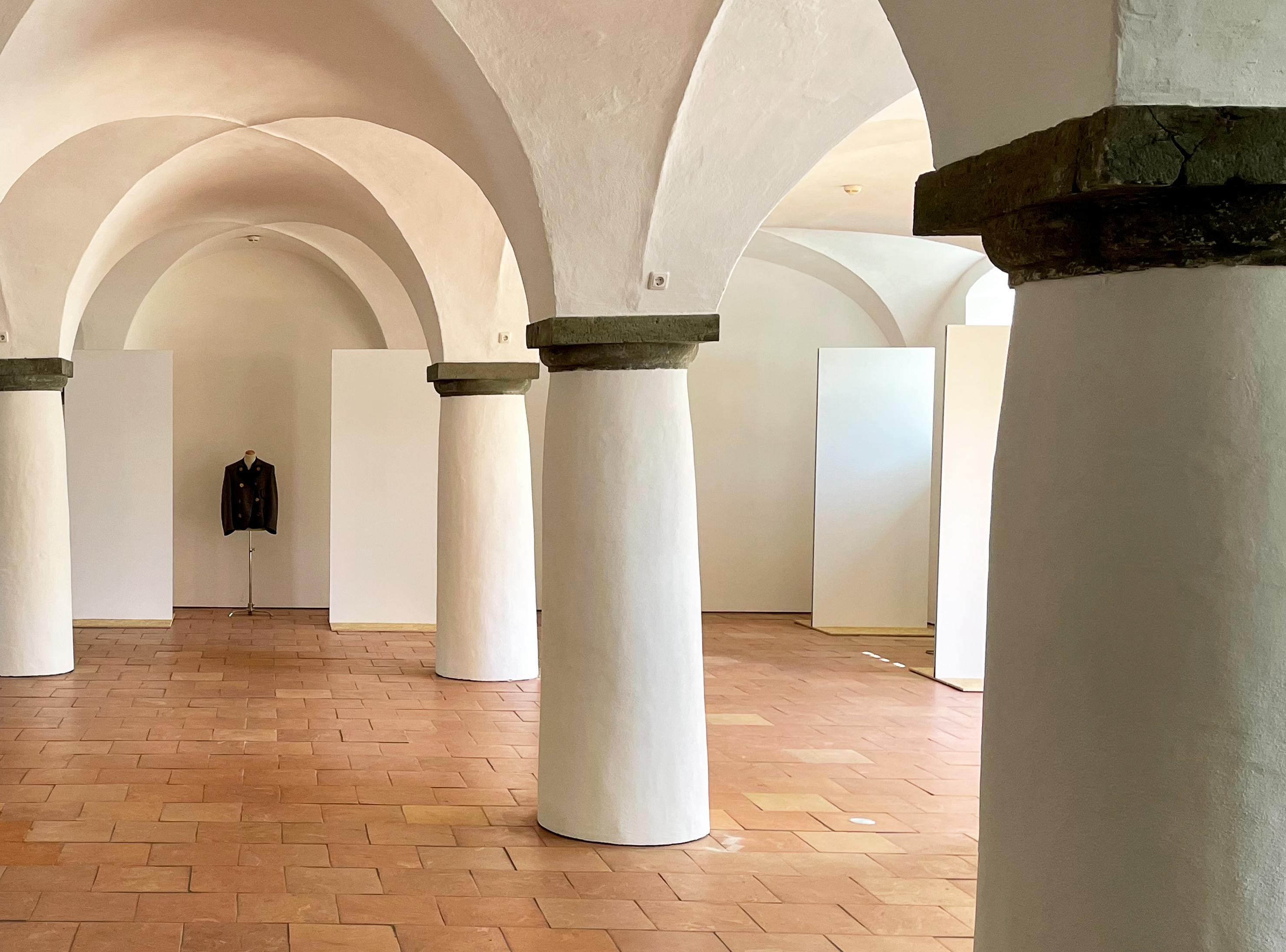
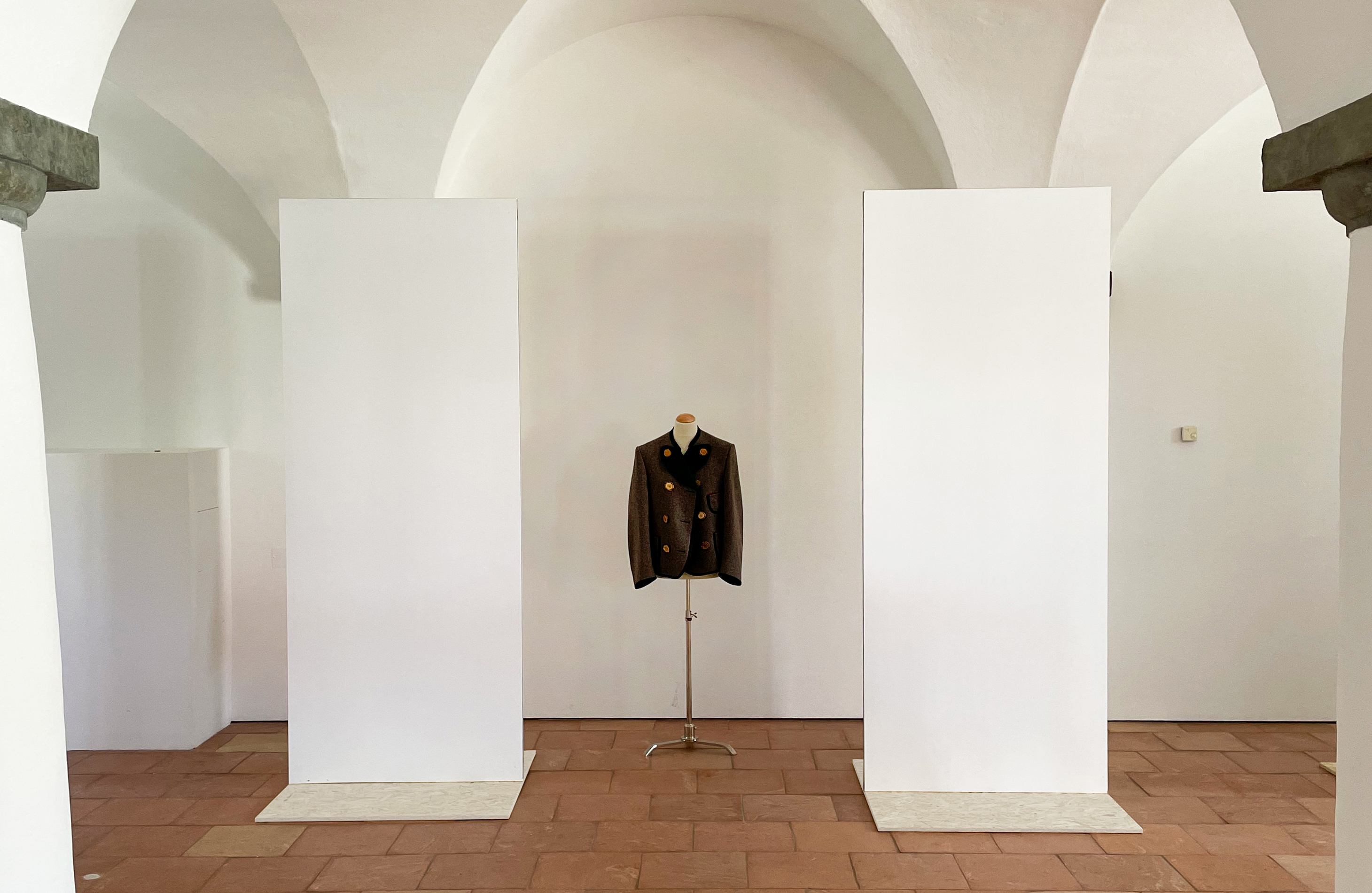
* In the test setup, the wall modules were mounted on wooden panels, see pictures. For professional use, there are more discreet solutions with stainless steel feet.
The most promising measure in the test was the installation of wall modules from the Mila-wall Acoustic series, which was developed specifically for rooms with a lot of background noise and is already being used successfully in noisy environments such as trade fairs for meeting rooms.
Wall and column absorbers from other manufacturers as well as Mila-wall Acoustic partition walls (see Figure 4) were installed in the test setup. The results are clearly illustrated by the following graphs on reverberation time:
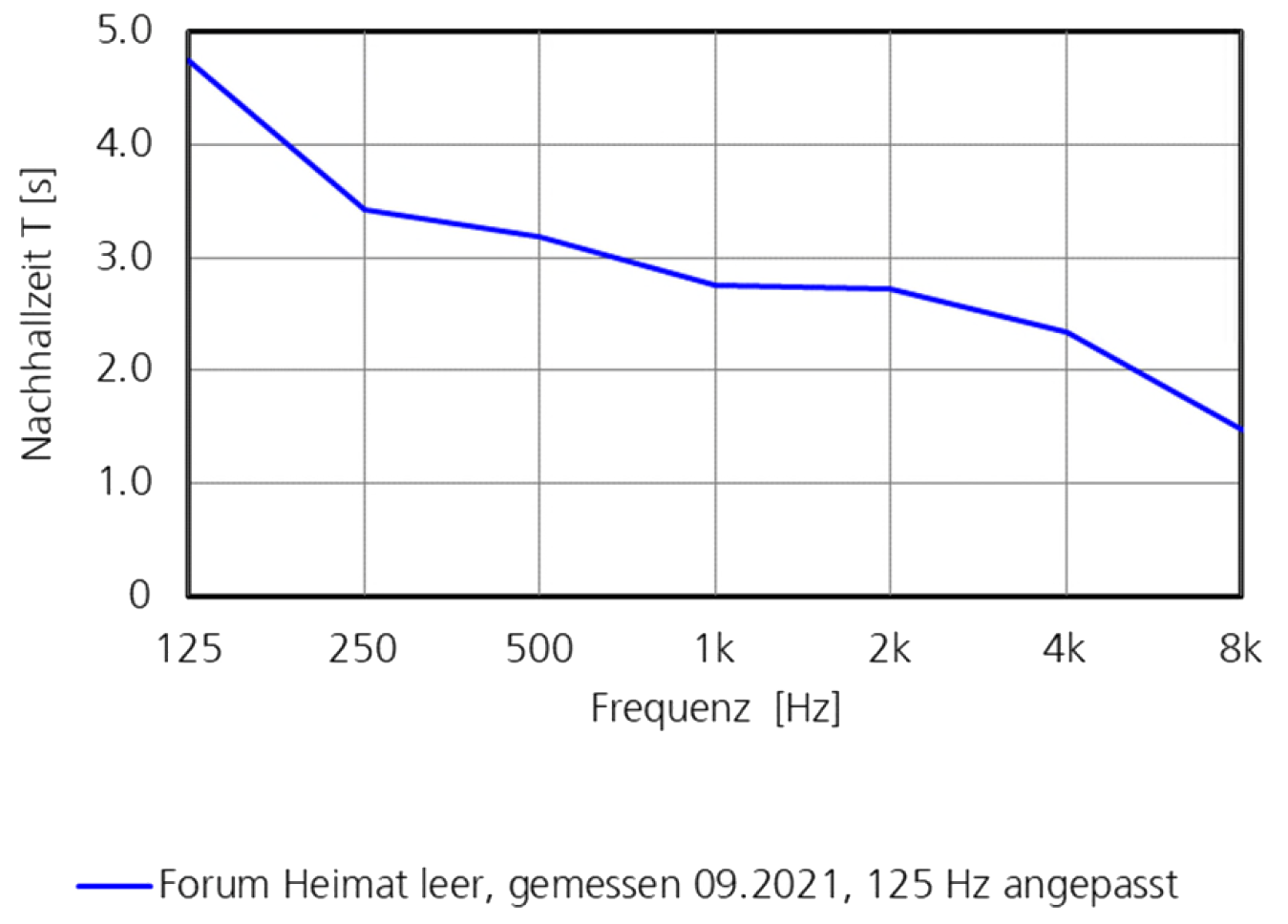
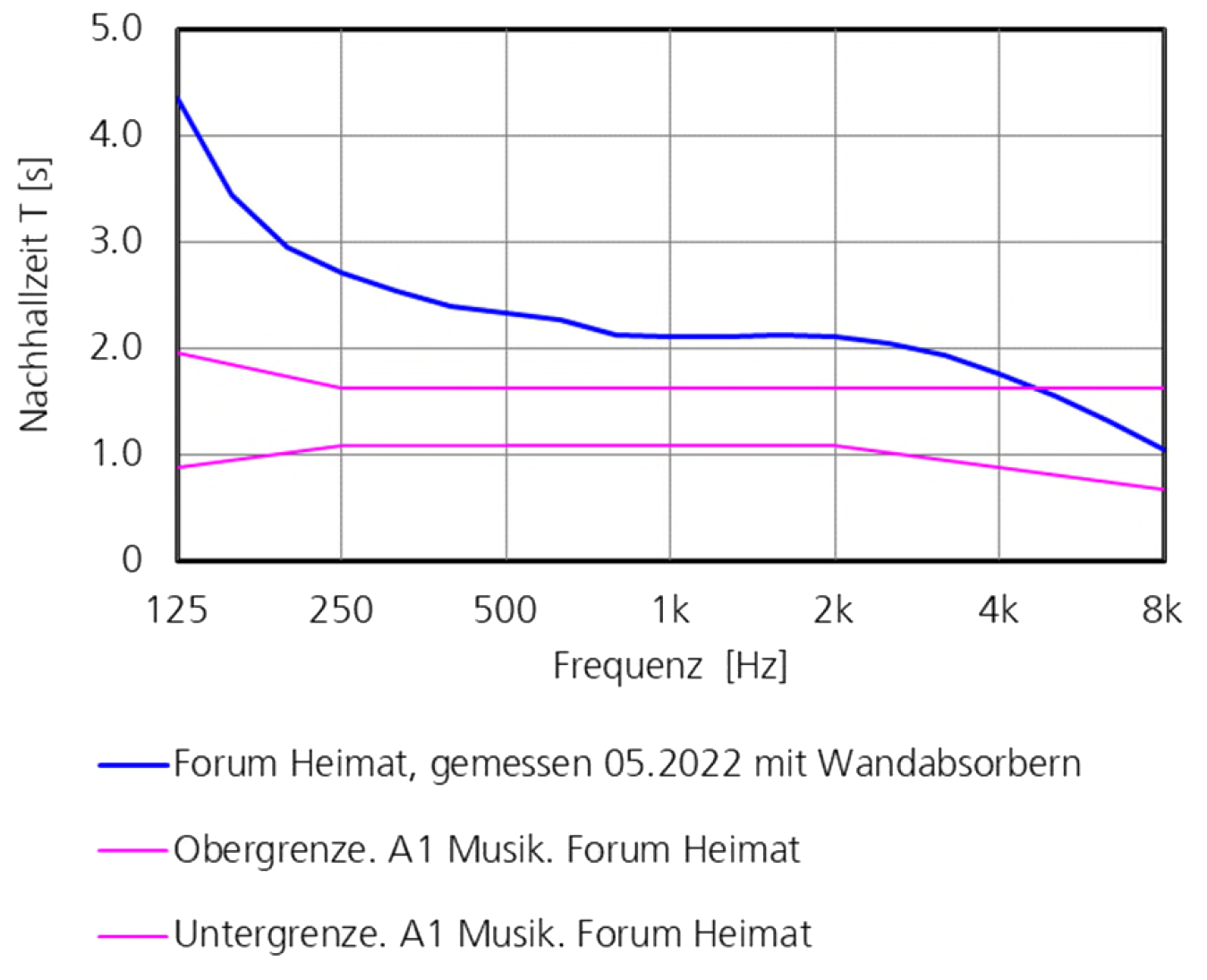
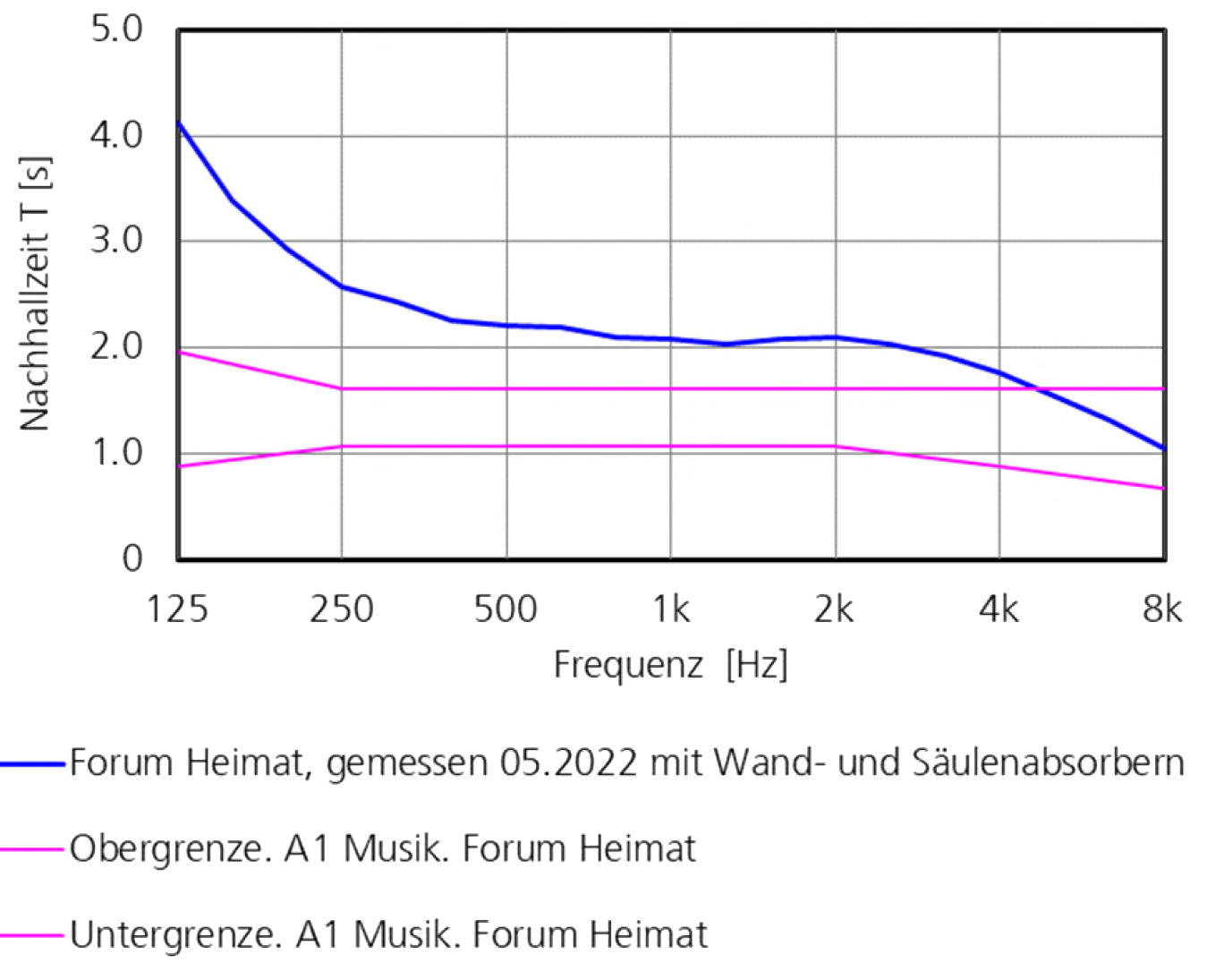
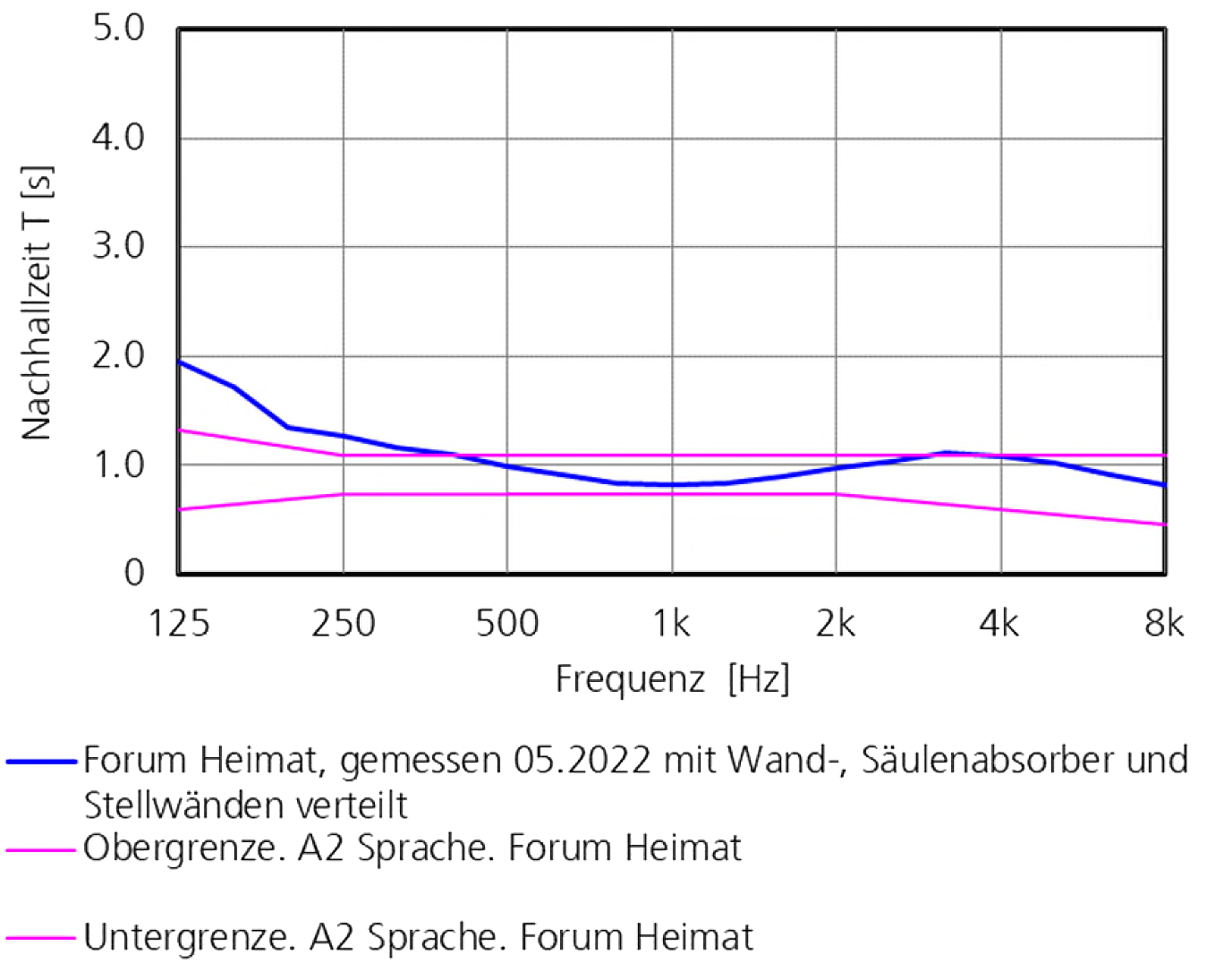
Once again, it has been demonstrated that the sound-absorbing wall modules of the Mila-wall Acoustic with micro-perforated surfaces not only achieve a significant improvement in acoustics under the most difficult conditions, but that their award-winning design also meets high aesthetic standards.
Without covering the vaults and frescoes, the discreetly designed, highly functional Mila-wall Acoustic was used to transform an acoustically ‘unusable’ room in the Benediktbeuern monastery into a space suitable for musical performances.
Project Glasswing
At this year's SIGGRAPH conference, Adobe is presenting ‘Project Glasswing’, a prototype augmented reality display case whose physical contents can be enhanced with digital information. However, it will probably be some time before the technology is ready for market.
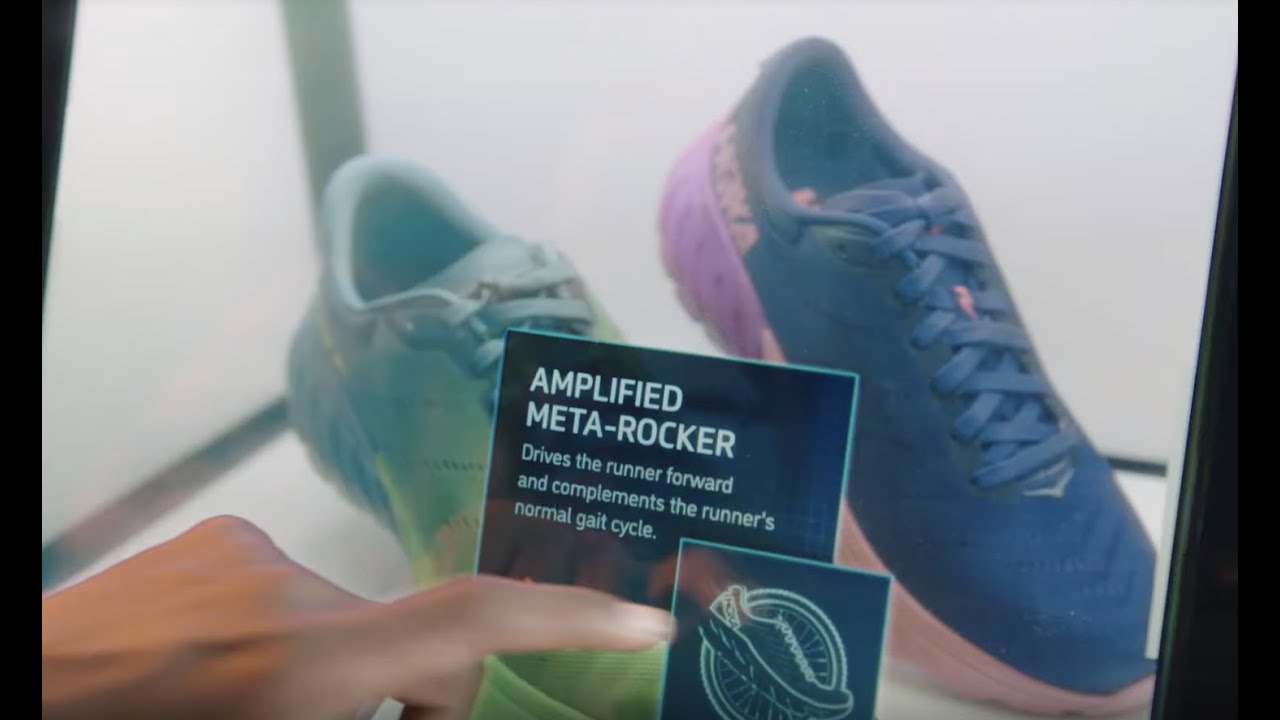
More information about Project Glasswing is available on the Adobe blog: https://theblog.adobe.com/imagining-breakthrough-experiences-project-glasswing/
Hacking The Heist
In 1990, a total of 13 artworks worth $500 million were stolen from the Isabella Stewart Gardner Museum in Boston. To this day, the theft remains unsolved and the stolen artworks are still missing. Because the founder's will stipulates that no artworks may be removed from the museum or changed in the hanging, empty picture frames have since borne witness to one of the greatest art thefts in history.
An experimental project by the digital museum platform Cuseum is now bringing at least two of the stolen artworks back to their rightful place for museum visitors with the help of augmented reality.
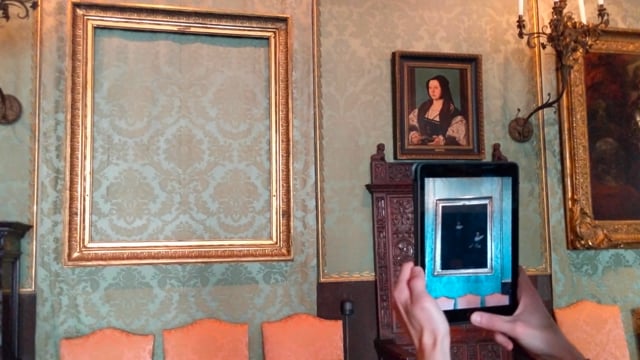
More information and additional videos can be found on the project website: https://www.hackingtheheist.com
Augmented reality at the Tate Museum
Facebook is not only extremely active in the field of virtual reality with its Oculus headsets, but also offers Spark AR, a platform for augmented reality. Together with the agency The Mill, Facebook's Creative Shop has now enhanced some of the artworks with augmented reality content for an exhibition at the Tate Museum.


Source: https://tech.fb.com/augmenting-abstraction-facebook-expands-ar-experiences-with-tate-britain/
More information about the project, a list of the artworks that have been edited, and a video showing the technology in action can be found on Facebook's tech blog.
Museum of Other Realities
The Museum of Other Realities is a virtual museum exhibiting digital art. In addition to comparatively classic-looking sculptures and paintings, visitors can also expect “living” exhibits, walk-in exhibits and soundscapes in the immersive application.

After around two years of development, MOR is now in early access and can be visited by interested parties using a virtual reality headset and the corresponding Steam-App. Just like in a real museum, the exhibition rooms can be viewed by several users at the same time, and open parties are even held regularly in the virtual museum rooms.


Source: https://museumor.com/gallery
More information about the project, the artists featured and screenshots of some of the artworks from the museum can be found on the Museum of Other Realities website. You can also submit your own artworks to the museum's ever-growing collection there.
ARtGlass at Madame Tussauds
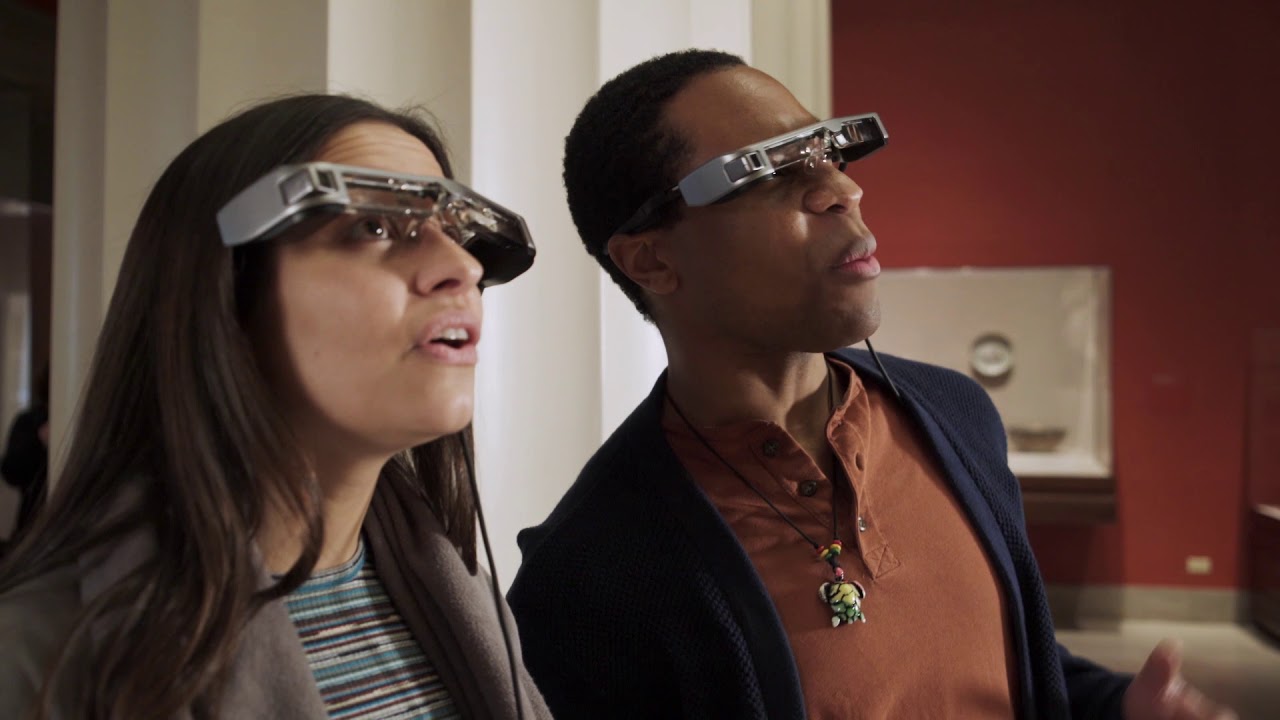
The company ARtGlass wants to bring augmented reality glasses to museums, historical sites and other cultural institutions. Madame Tussauds in Washington is one of the first museums to plan to offer this hardware for AR tours as a central part of its visitor experience from this summer onwards, displaying ‘fully immersive dynamic holograms’ within the exhibition. Sounds exciting.
Thresholds
British artist Mat Collishaw enables visitors to his travelling exhibition ‘Thresholds’ to visit an exhibition by scientist and photography pioneer William Henry Fox Talbot in virtual reality. The Briton presented his photographic prints for the first time in 1839 at an exhibition in Birmingham.
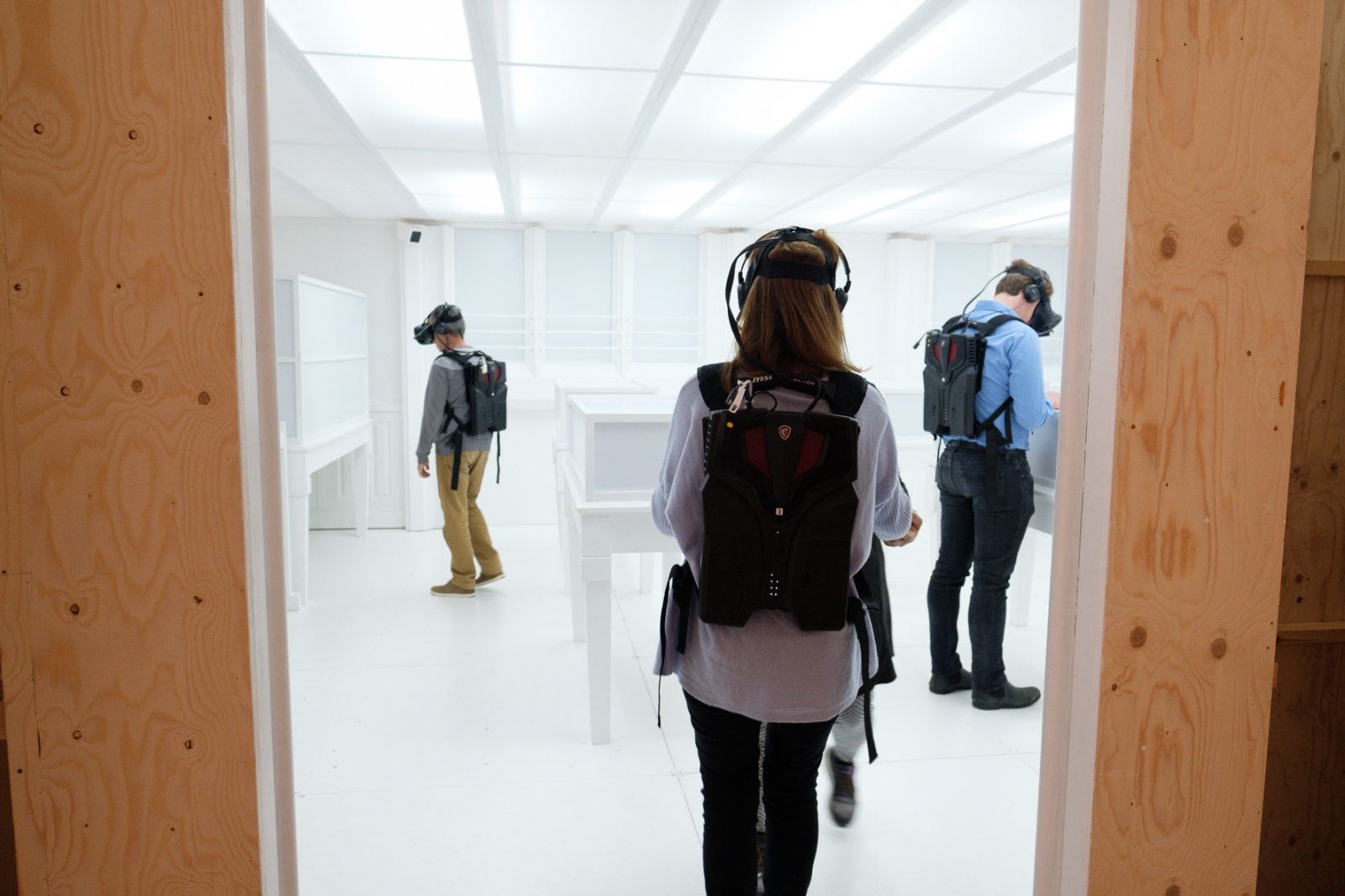
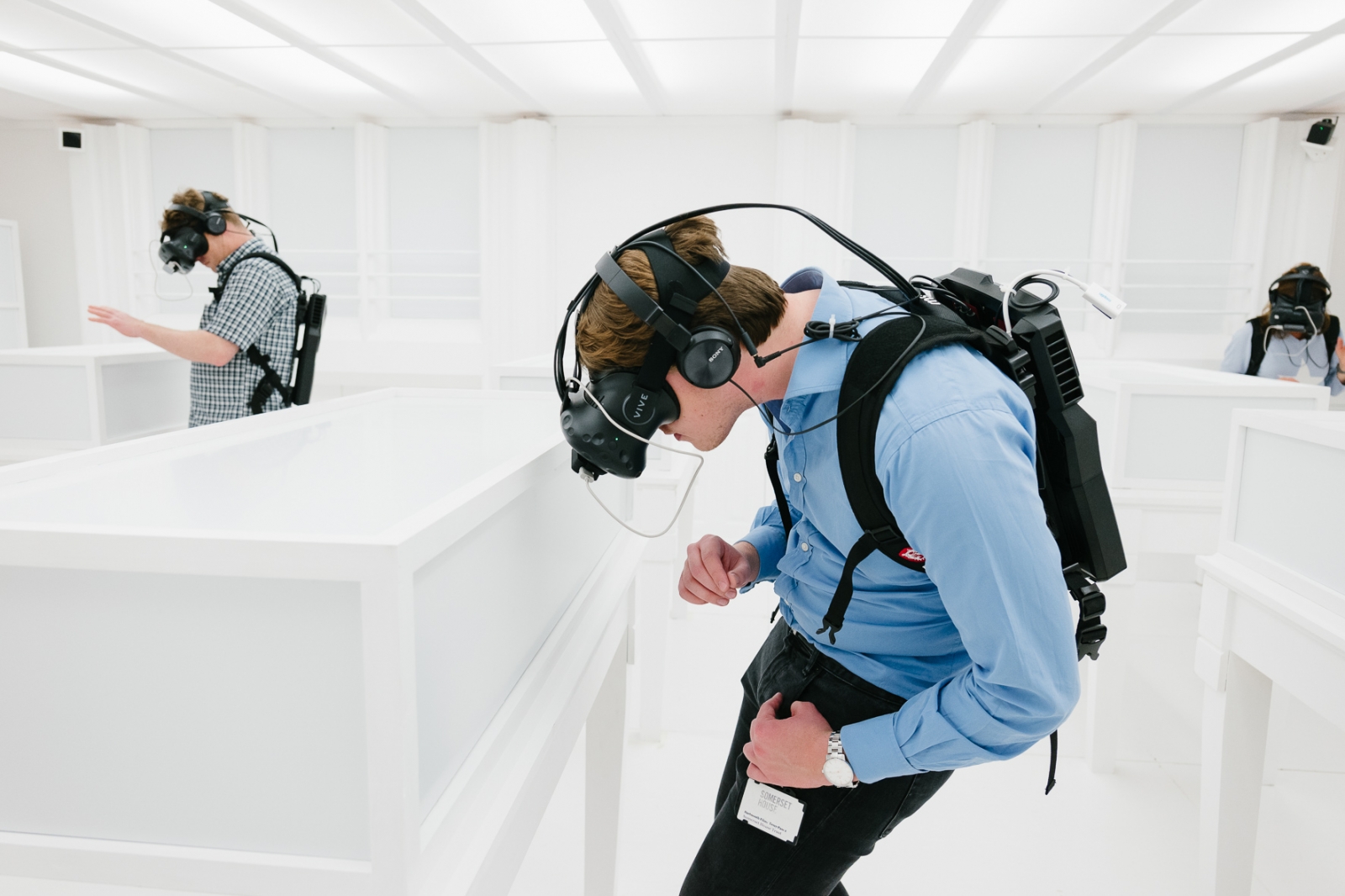
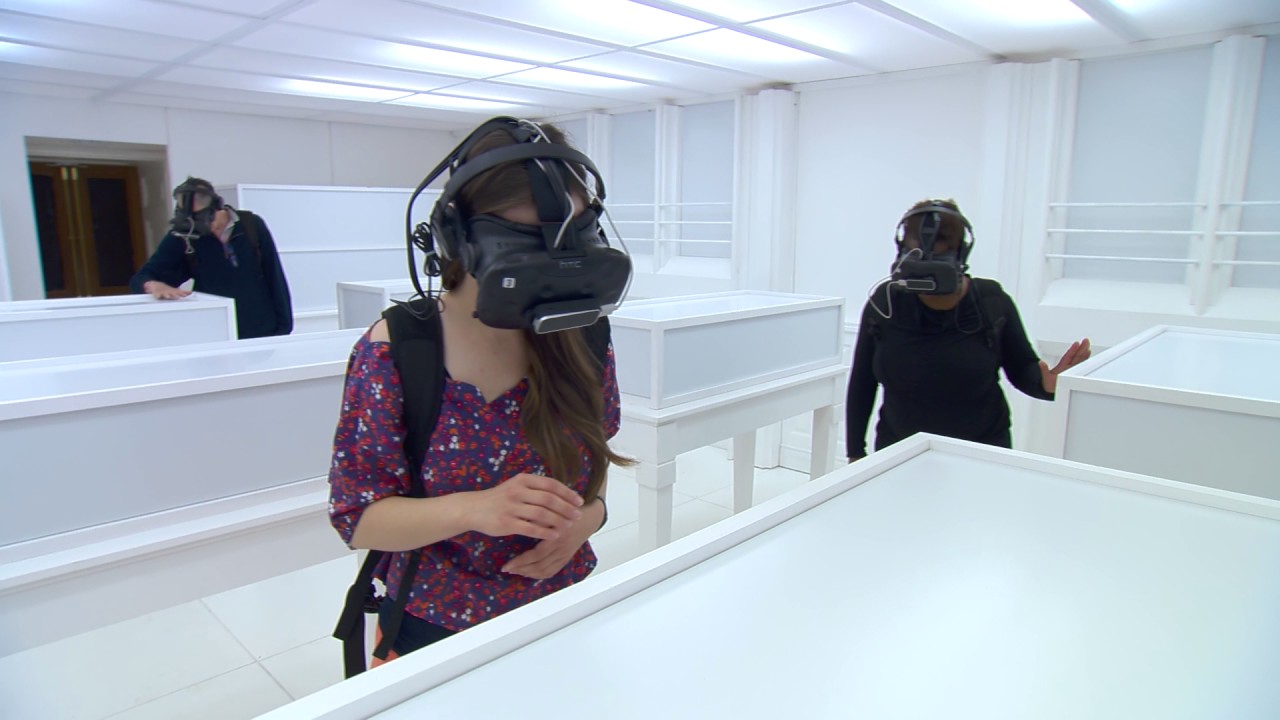
Source: https://matcollishaw.com/exhibitions/thresholds/
More information about ‘Tresholds’ and the dates of the travelling exhibition, as well as other exhibitions by Mat Collishaw, can be found on the artist's website: https://matcollishaw.com.